

Co-Founder & CEO Head of Sales



J plugs, also known as SAE J1772 plugs, are a common charging standard used for Level 1 and Level 2 EV charging. These plugs have five pins and are rated for everything from 1.4 kW to 19.2 kW. These plugs have played a significant role in the development of EV charging infrastructure, offering a convenient and widely adopted solution for charging EVs at home, workplaces, and public charging stations.
One of the key advantages of J plugs is their compatibility with a wide range of EV models from nearly any manufacturer, including with use of adapters. Whether you own a Nissan, Chevrolet, BMW, or other popular EV brands, chances are your vehicle can be charged using a J plug. If you drive a Tesla, you likely have an adapter or two in your car that allows you to use J plugs with minimal inconvenience.
With the growing popularity of EVs, J plugs continue to be a reliable and accessible charging solution. As charging infrastructure expands, finding J plug-compatible charging stations is increasingly convenient, providing EV owners with peace of mind and a seamless charging experience.
Matcha uses J plugs at many of its locations to offer convenient charging at multifamily properties, commercial buildings, and public spaces.
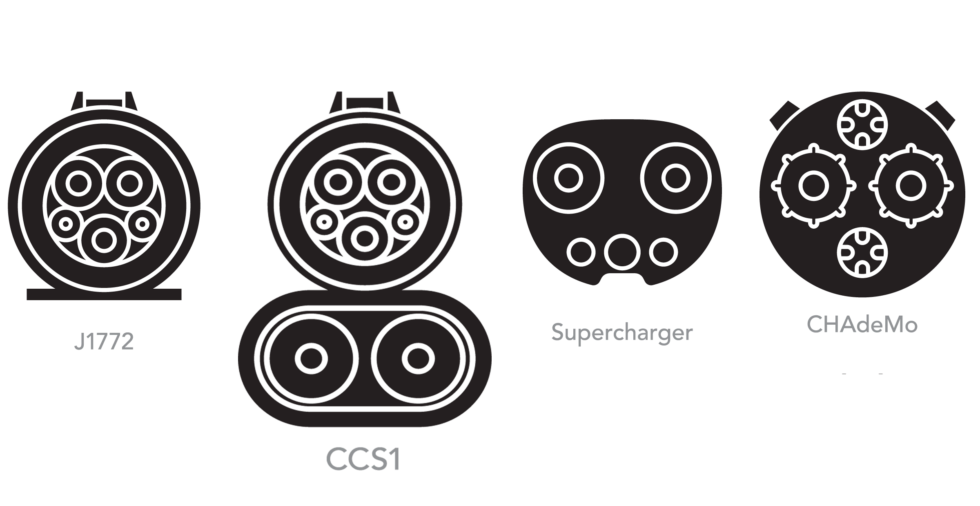
The de facto standard level 3 (DC Fast) charger plug is the Combined Charging System (CCS) Type 1. CCS is an international standard that combines both DC and AC (Alternating Current) charging. It employs a combo connector, integrating the existing Type 2 AC charging with two additional DC pins. CCS is widely adopted in Europe and is increasingly becoming the global standard. Many European and American automakers support CCS, enabling compatibility with both Level 2 and DC fast-charging stations.
CHAdeMO is a fast-charging DC (Direct Current) standard originating from Japan. It supports high-powered charging and is commonly used by Asian automakers such as Nissan, Mitsubishi, and Kia. CHAdeMO connectors are distinguishable by their large, round plug shape and are compatible with DC fast-charging stations.
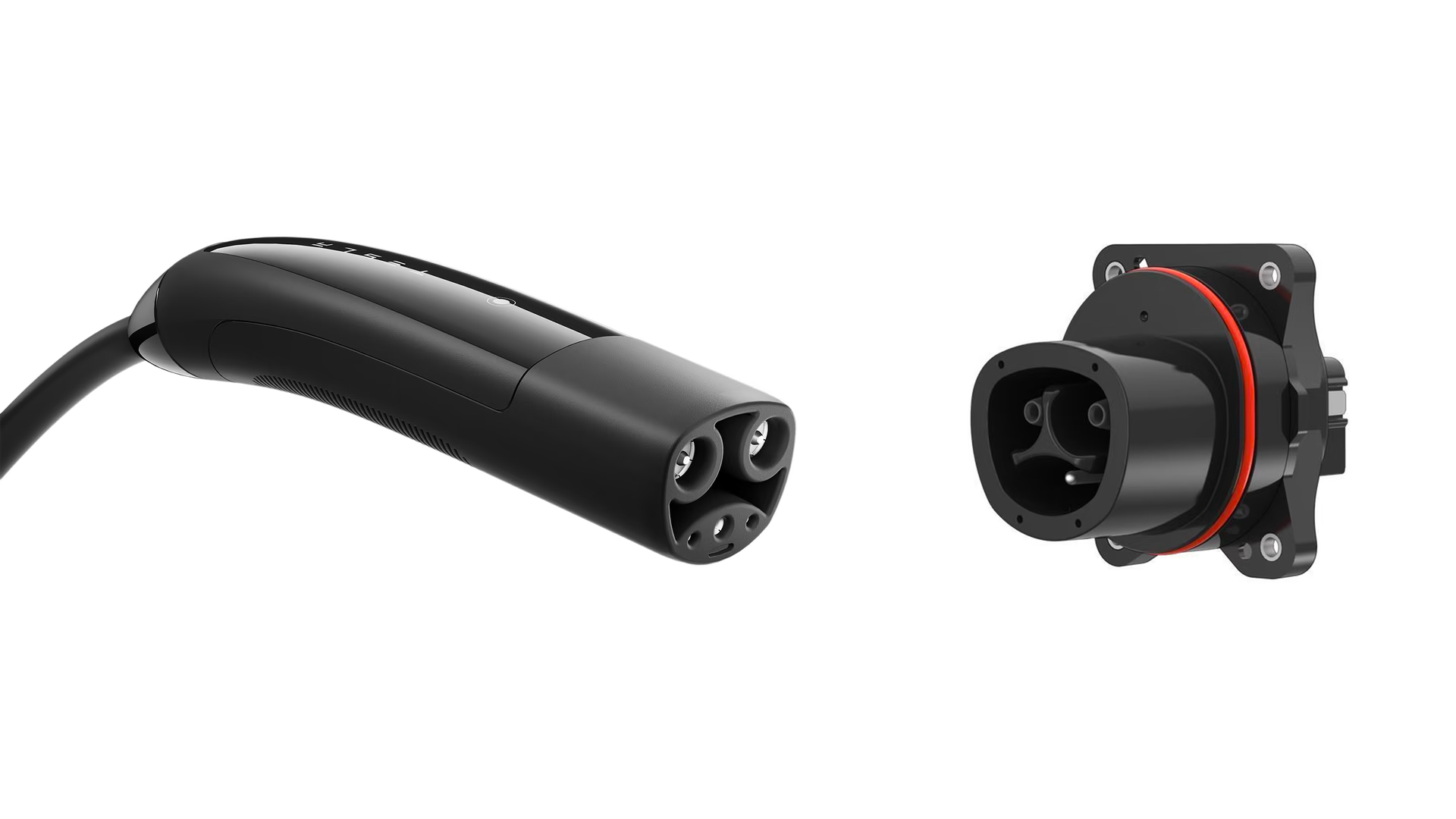
Tesla’s Supercharger, and the North American Charging Standard (NACS) as it is now called, is a proprietary DC fast-charging standard designed specifically for Tesla vehicles, and recently opened in 2023 to additional automakers. Historically, Tesla Superchargers have not been compatible with other EVs, while Tesla owners can use adapters to connect to non-Tesla charging stations. However, this has evolved quickly in 2023, with Tesla announcing partnerships to allow additional automakers to use their charging networks including Ford, GM, and Rivian. Tesla has invited other automakers to adopt their plugs to put the Tesla charging connector and charge port on their equipment and vehicles. According to Tesla, NACS is now the most common charging standard in North America.
As the EV market expands, there is a growing emphasis on developing widespread charging infrastructure. Governments, utilities, and private companies are investing in expanding the availability of Level 2 and Level 3 charging stations, especially in urban areas, workplaces, and public spaces. This trend aims to address "range anxiety" by providing convenient charging options for EV owners.
Particular challenges exist in multifamily EV charging, specifically a need for systems that allow sharing of limited EV charging assets at scale, while also giving property owners control of their assets and power usage. Multifamily assets is Matcha’s core focus, as our company seeks to expand access to affordable, reliable, and energy efficient EV charging solutions for renters to share.
Level 2 charging typically operates at 240 volts and offers charging speeds of around 3-7 kW. However, recent advancements in charging technology have led to the development of higher-powered Level 2 charging stations capable of delivering up to 20 kW. These faster charging options enable shorter charging times and greater convenience for EV owners.
Smart charging solutions are gaining traction, allowing EVs to interact with the power grid intelligently. By leveraging advanced communication and control systems, smart charging enables optimized charging schedules, load balancing, and integration with renewable energy sources. This trend promotes grid stability, reduces strain on the power infrastructure, and facilitates cost-effective charging options for EV owners.
Vehicle-to-Grid (V2G) technology is an innovative area of EV charging that enables EVs to not only receive power from the grid but also feed excess energy back into it when needed. This bidirectional charging capability has the potential to create a more sustainable and flexible energy system, including for multifamily use cases. V2G and V2B (vehicle to building) is a category of innovation that paves the way for utilizing EV batteries as energy storage devices, or “virtual power plants” allowing EV owners to participate in grid services and support grid resilience.
As electric vehicles become increasingly prevalent, the development of diverse EV charging standards and the expansion of Level 2 and Level 3 charging infrastructure play vital roles in ensuring the adoption and usability of EVs. Understanding the different types of charging standards, such as CHAdeMO, CCS, and Tesla Supercharger, enables EV owners to identify compatible charging options, and property owners to choose equipment and solution providers wisely, to future-proof properties for the transition to electric.
Matcha offers compact, smart EV chargers specifically designed for multi-unit buildings with minimal infrastructure disruption. We handle the entire process. Our team applies state and utility incentives to bring down equipment and installation costs, with options that need no capital from the property owner. Our pay-per-use model means drivers only pay for what they need while property owners pay no capital cost. Schedule a free site assessment to determine if your property qualifies for charging with no capital cost.
Co-Founder & CEO Head of Sales
The rapid growth of electric vehicles (EVs) has sparked significant developments in EV charging infrastructure. As the demand for convenient and efficient charging solutions increases, it's crucial to understand the different types of EV charging standards for plugs and the emerging trends impacting Level 2 (L2) and DC Fast charging. In this blog post, we'll explore the various charging standards and delve into the evolving landscape of EVSE.
Get in touch to see what Matcha can do for your property.

+1 (617) 286-4722

info@matchaelectric.com